Latest article
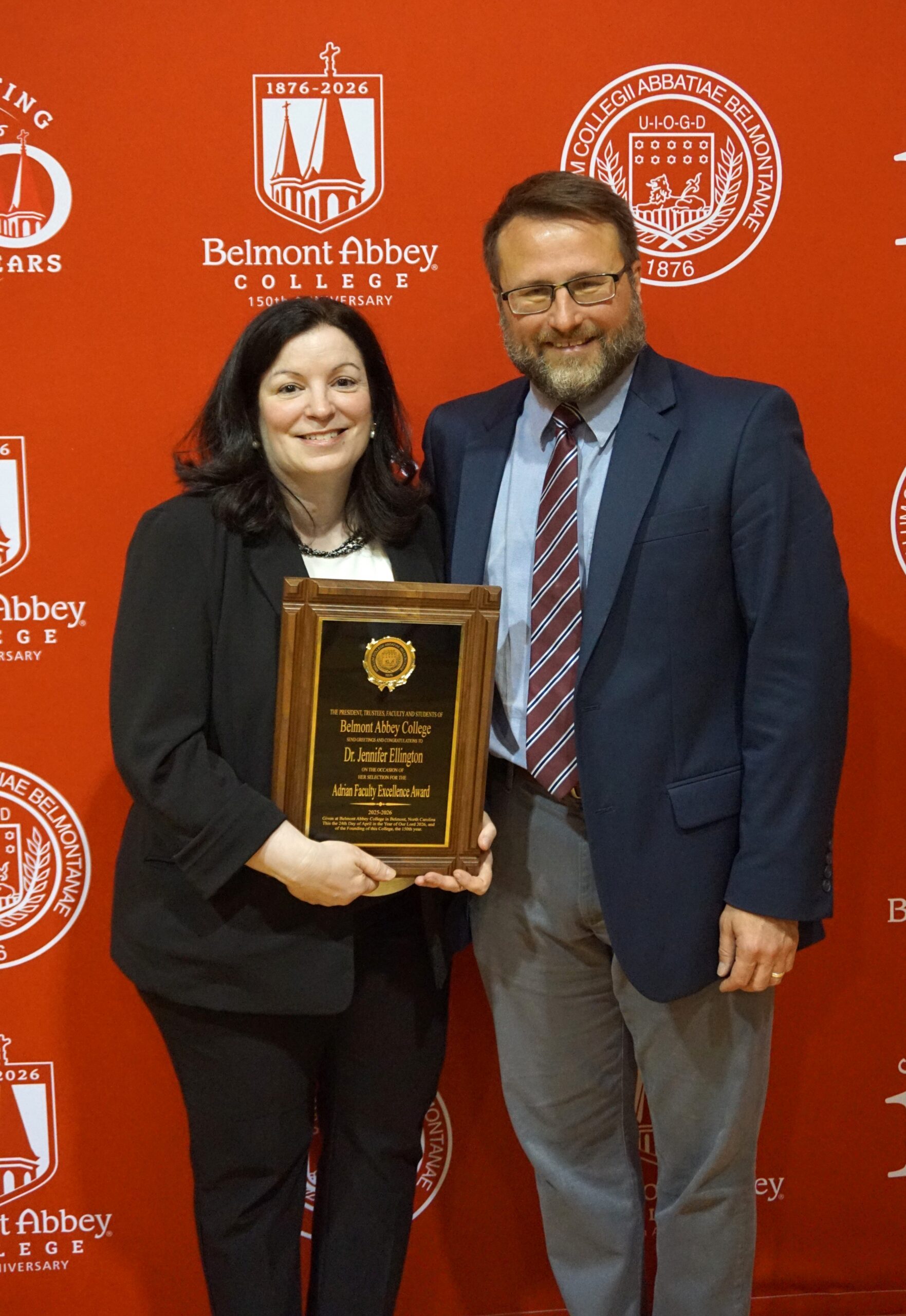
Belmont Abbey College Honors Recipient of the Adrian Award For Teaching Excellence Belmont, N.C. (April 27th, 2026) – Belmont Abbey College hosted its 35th Annual Academic Awards Ceremony on April 24, 2026, in the Haid Ballroom, recognizing outstanding student and faculty achievements across the college. Among the thirty-five awards presented was the Adrian Award for Teaching Excellence, one of the institution’s highest faculty distinctions. Established in 1984 by Mr. and Mrs. Herbert Adrian, the award celebrates faculty members who demonstrate exceptional commitment to teaching and student development. Belmont Abbey College encourages students to learn, seek truth, and thrive in an authentic and supportive environment, guided by exceptional faculty who lead in their fields and serve as exemplary community members. This year’s recipient of the Adrian Award is Dr. Jennifer Ellington, Associate Professor of Biology. “As Dr. Ellington marks her twentieth year at the Abbey, her impact extends far beyond the curriculum,” said Dr. Joseph Wysocki, Provost at Belmont Abbey College. “She is an exceptional professor and mentor who goes above and beyond to support her students both academically and personally. She truly embodies the Benedictine hallmarks, fostering a community rooted in hospitality, humility, and a genuine commitment to the growth and well-being of each student.” Dr. Ellington is widely recognized for her engaging instruction across courses such as genetics, microbiology, and molecular biology, as well as for her dedication to undergraduate research opportunities. In her role as the college’s Pre-Health advisor, she also plays a key part in strengthening professional pathways for students, helping many successfully pursue admission to competitive medical programs. Her influence is best reflected in the words of her students. One student shared, “Dr. Ellington has a kind and gentle heart. She is extremely smart and over-qualified as a Professor, and I feel lucky to have her…