
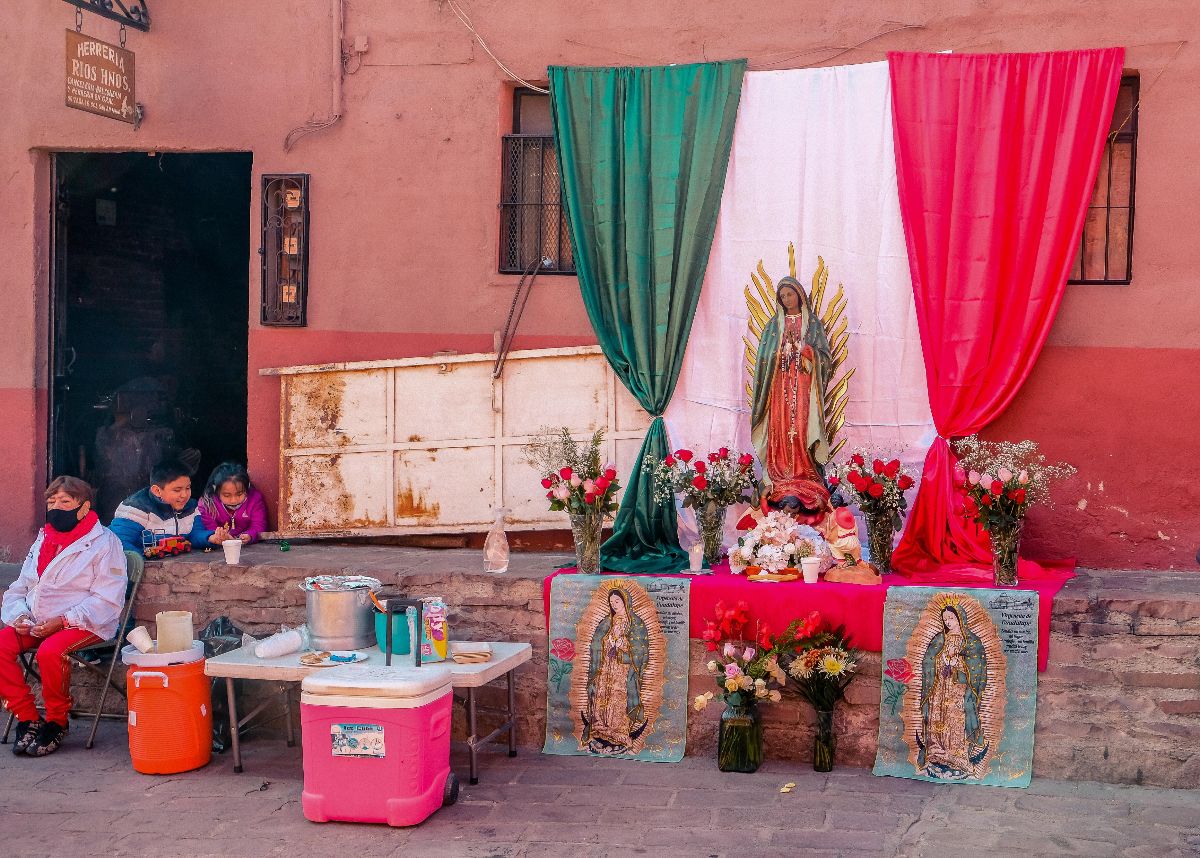
Most of us probably recognize Our Lady of Guadalupe: that miraculous image which appeared on Juan Diego’s tilma as a sign that Mary herself had spoken to him. The portrait is all but ubiquitous, not just in Mexico, but across the United States as well, and to a certain extent throughout the world. It’s a beautiful image, but this past Monday, December 12, as we celebrated the Feast of Our Lady of Guadalupe, I started thinking about why she seems to have captured our cultural imagination to such an extent.
And I think, for those of us in the Americas, the key might lie in the Our of Our Lady.
That Christ’s mother, whom he gave, also, to us, would appear to the simple, the poor, and the utterly, vulnerably human, is a wonderful comfort. But that she would do so in our own clothes, as it were, and our own, recognizable culture – that Our Lady of Guadalupe takes on the Nahuatl speech, the traditional dress, and the knowledge of place particular to that corner of Mexico – is somehow more wonderful still.
It reminds me that receiving her as our mother is not a mere gesture. She takes on our patterns and colors, the textures of our experience, embracing us, not as if we were an abstracted mass of peoples, but as individuals and families immersed in animating culture. In a beautiful echo of her Son’s incarnation, she comes to meet us with the familiarity of our “Little Mother,” even turning what is native to us – whether roses or robes – into a miraculous gift and a sign of her nearness.
Soon we will begin the fourth and final week of Advent. We’ll light all four candles in our Advent wreaths and make the last preparations for welcoming Christ into our homes at Christmas. As we near this beautiful feast, let’s imitate the gentle Lady of Guadalupe, Our Lady, by reaching out to know and love others in the language native to their souls.