
The Gift of Beauty: Women in Philanthropy
The Gift of Beauty: Women in Philanthropy
The legacy of St. Katharine Drexel and Lettie Pate-Whitehead
By: Dr. Christine J. Boor
Vilma György Pallos Chair in Classical and Liberal Education
& Associate Professor in the Honors College
I’ll never forget the first time I saw Belmont Abbey’s Basilica.
To my untutored imagination at 17 years old, it was like beholding a real-life castle — the kind you see in a Disney movie from an imaginary world of princesses, princes, nobility, and tradition.
It was beautiful, and its defining grandeur left an imprint on my heart and mind, becoming a bedrock in my imagination that played no small part in drawing me to the Abbey, first as a student and later as a faculty member.
Even now, on the way to my office in St. Leo’s Hall, I still feel a thrill when I pull into the main entrance of campus and see the Basilica of Our Lady Help of Christians, welcoming me on my way to perform the less fantastical, though rich and rewarding, tasks associated with being a professor here.
Faithful Philanthropy
Only in recent years did I learn the significance of the Basilica and Abbey in the history of American Catholicism — and the way it was shaped by saintly intervention.
In the early 1890s, the Basilica’s construction was on the brink of stalling due to a lack of financial resources. Abbot Leo Haid turned to a prominent Catholic philanthropist to seek aid.
That philanthropist was Mother Katharine Drexel of Philadelphia, then a 35-year-old nun whose inheritance became the foundation of a religious order dedicated to aiding Native Americans and African Americans. Today, we know her as St. Katharine Drexel, canonized in 2000 by Pope St. John Paul II.
Before she entered religious life and founded the Sisters of the Blessed Sacrament in 1891, Katharine was one of America’s wealthiest heiresses, born in 1858 into the Drexel family of Philadelphia. While her family pursued philanthropic giving that served as the financial bedrock of many charities and universities, Katharine felt a call to devote not only her fortune but her very life to the service of God in the Catholic Church.
Her order’s unique apostolate ministered to minority populations left behind in post-Civil War America — especially through education. During her travels across the nation as a young woman with her stepmother and sisters, Katharine witnessed minority communities’ struggles firsthand. These encounters planted the seeds of her life’s vocation to service and giving.
Building Belmont
When Abbot Haid received funds from Mother Drexel to complete Our Lady Help of Christians Church (which would become North Carolina’s first Cathedral), he did so in accord with what came to be known as “the Drexel conditions.” These conditions required that any church built with the future saint’s aid would move towards racial integration within the worship space by allowing African Americans to worship within.
While Abbot Haid had already provided measures for integrated worship, “the well-publicized ‘conditions’ Katharine Drexel imposed when she helped build a church” provided leverage “to people like Haid who sought to secure this relative racial unity,” writes Fr. Paschal Baumstein in his biography of Leo Haid.
In a letter to Mother Drexel, Abbot Haid emphasized the larger effect her donation would have in establishing a moral example of integrated worship in what was then the Jim Crow south:
If the Benedictines at the Abbey and in Charlotte break down the ugly prejudices against [racial minorities]—it would go far to enable the Bishop to insist on building all future churches large enough to make room for [racial minorities]. This last reason seems to me the principal motive. There is no use in butting the head against the hard wall of prejudice — but we may climb over the wall or go around it slowly — especially by good example. There are other reasons — but let these suffice.… It would do my heart good to see some black faces there too — in the body of the church at that.
Saint Katharine’s generosity allowed for the completion of the Abbey Basilica of Maryhelp, which continues to welcome students, faculty, and visitors of all backgrounds into the warmth of our monastic community, which abides by the hallmark of encountering everyone it meets in persona Christi — as though greeting Christ himself.
Its iconic beauty is the fruit of the hidden labors of that community, brought to completion through the saint’s $4,000 gift. Her donation — a vast sum at the time — seems today inconceivably small to build something so beautiful. While the monetary value of that donation has substantially decreased in today’s economy, the value of what she gave has only increased with time.
Firm Foundation
Architecture is like education — it provides the space for flourishing and shapes the places in our souls too deep for words that reach out for divine beauty, truth, and goodness. While Mother Drexel’s gift to build the Basilica continues to afford our community a space to worship and encounter the divine, so too do those benefactors who provide the financial assistance that allows students to encounter the truth, beauty, and goodness of God through education.
Perhaps less known to many who inhabit the Abbey community than the relationship between Mother Drexel and the Belmont Abbey community is the relationship between the college and the foundations that have contributed to the flourishing and educational opportunities of our students.
The Lettie Pate-Whitehead Foundation stands out among these. Conkey Pate Whitehead chartered the foundation in 1946 to honor his remarkable mother’s life and legacy. Belmont Abbey College has enjoyed a relationship with the foundation since the 1980s.
Letitia “Lettie” Pate was born in Virginia in 1872, just four years before the Abbey and College were founded. Lettie, as she was known, was a precocious learner born into a devout Episcopalian family. Her early life was marked by a dedication to faith and learning during her family’s financial instability.
During her youth, Lettie lived “among elderly female family members of uncertain means.” The absence of formal education and economic uncertainty among these women later influenced her interests as a philanthropist. The foundation that bears her name was specifically chartered “for the aid and benefit of poor and deserving Christian girls and women” in nine states, including North Carolina.
How did this unique girl become the woman capable of establishing a philanthropic organization that since 1946 has given some $767 million in aid?
In 1894, while in her early twenties, Lettie Pate married Joseph Brown Whitehead, an attorney turned businessman. A few years into their marriage, Joseph approached Asa Candler, the president of the Coca-Cola Company, with an innovative idea: why not bottle the famed fountain soda?
Candler and his colleagues deemed this scheme “preposterous” and sold Joseph and his business partner the exclusive bottling rights for Coca-Cola for just one dollar — a single dollar that would become the seed of one of America’s great financial successes in the 20th century.
When Joseph Whitehead died suddenly at the age of 42 in 1906, Lettie Pate Whitehead did not allow grief or premature widowhood to crush her spirit. She helped ensure a bright future for the bottling business and became one of the early 20th century’s most successful businesswomen. She became one of the first women ever to sit on a major corporate board when she joined the Coca-Cola Company board of directors in 1934. Lettie died in 1953, leaving her entire estate to charity. She also inspired her sons to dedicate their fortunes to worthy philanthropic causes.
Two years later in Philadelphia, Mother Drexel went home to her Lord, leaving the remainder of her family’s estate to the philanthropic and educational endeavors of her religious order.
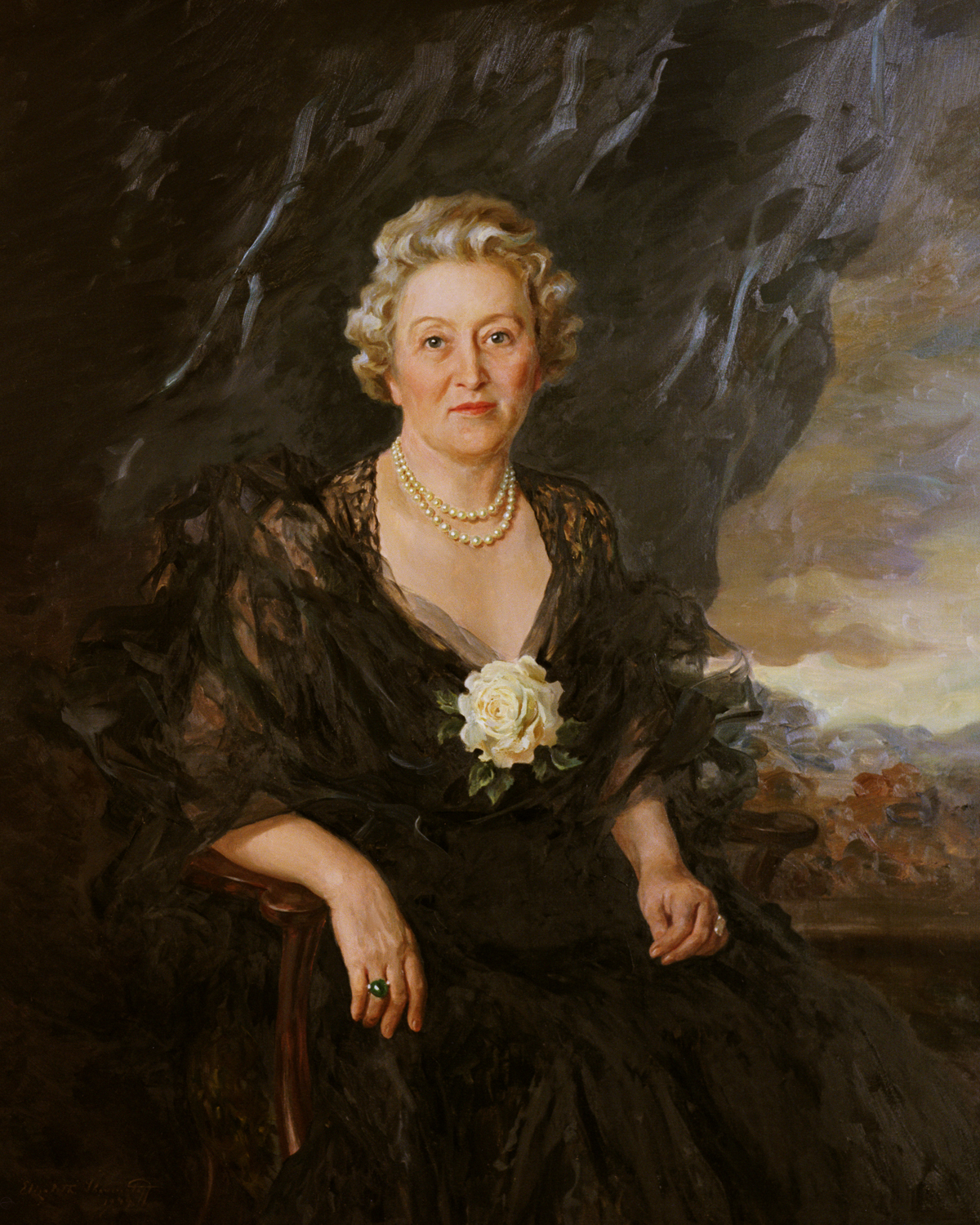
Saint Katharine Drexel and Lettie Pate Whitehead Evans were two of the 20th century’s most remarkable American women, each with a distinct path in the service of God and struggling neighbors, providing a model of generosity that continues to bless and inspire us today.
These women serve as a reminder that the beauty of a philanthropic gift is its ability to bear fruit long into the future.
Saint Katharine’s gift provides a glimpse of beauty, spires reaching towards the divine, that blesses our community every day. It is an icon of the soul searching for God, that in all things He may be glorified, the very kind of soul that the Lettie Pate Whitehead Foundation seeks to build up by providing educational opportunities to women with significant financial need.
These gifts break the bounds of time and span generations. Their lives also remind us of something else: so many good things can hinge on the life of a single person. These valiant women — in their perseverance through adversity in pursuit of the good and true — became an origin of goodness for countless others.
Not all of us have the financial means of St. Katharine Drexel or Lettie Pate Evans Whitehead, but, in the end, each woman gave all she had, her very substance, her life. May their example call each of us to do the same.