Serving the Church at Home and Beyond: The Abbey’s Diaconal Formation Program
By: Laura Schaffer
Dr. Alessandro Rovati became a theologian to serve the Church. He lives out his vocation as Chair of Belmont Abbey’s Theology Department — and through active service to the Diocese of Charlotte.
As the director of the College’s unique Diaconal Formation Program, Rovati combines his vocation and joyfully notes that “there’s nothing more beautiful for a theology program than to put its expertise at the service of the life and needs of the local church.”
For the past 2,000 years, deacons have assisted priests in their pastoral ministry, serving the liturgy and performing acts of mercy. Deacons are called to “attend the table and the Word,” Rovati explains.
Deacons baptize, catechize, and preach. They minister to their parishes in a way that models and embraces community stewardship and self-giving. For a time, the diaconal vocation, originally distinct from that of the priest, was subsumed into the stages of priestly discernment. The Second Vatican Council, however, reinstated the practice of ordaining permanent deacons while preserving the diaconal stage on the path to priesthood.
Heralds of the Gospel
Since then, the Charlotte diocese has embraced the formation of permanent deacons differently. In recent years, diocesan leadership has determined to create a more rigorous and substantive program. To this end, they reached out to Rovati at Belmont Abbey College, having already established a relationship with the college through its education of seminarians.
After years of careful collaboration, the Abbey officially began its new Diaconal Formation Program in 2023. The program offers a certificate after three-and-a-half years of study and 18 theology courses as part of the diocese’s five-year discernment and formation process.
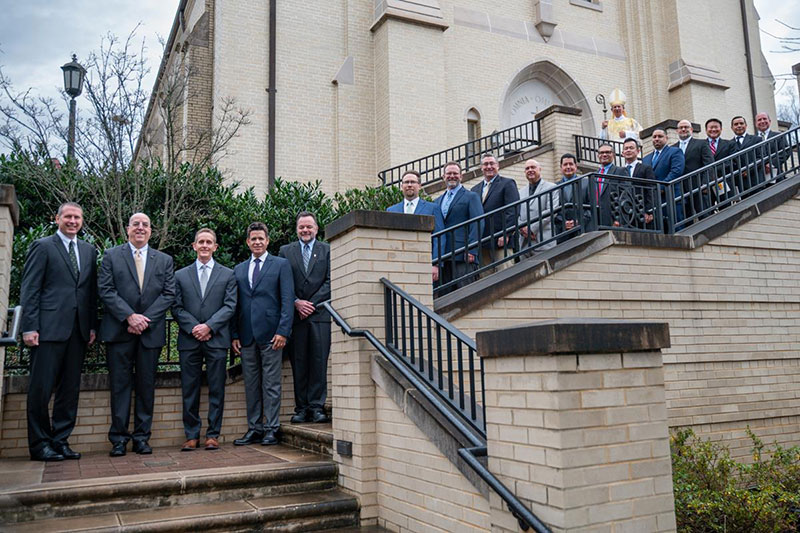
The synchronous online program was designed to meet best the needs of men working full-time, supporting families, and living throughout the diocese. Seventeen men are enrolled, having completed their first year this past January and been formally accepted as candidates by Bishop Emeritus Jugis.
At the same time, diocesan deacons renewed their promises. The candidates will continue to deepen their familiarity with Scripture, tradition, and Church teaching throughout their formation, exploring how these rich and vital resources can nourish their future ministry. Course assignments often ask students to explain their study topics as if to a parish, preparing them to become “heralds of the gospels.”
New fervor
Many have told Rovati that the program has enriched their lives of faith and transformed how they participate in the Liturgy. It has opened their hearts and minds to the inexhaustible wealth of biblical and Church tradition, sparking a new fervor in their spiritual journey. This transformation is evident in the “depth and urgency” of the student discussions, all of which powerfully demonstrate their eagerness to make an “impact on the life of their local communities.”
One of Belmont Abbey’s Strategic Plan’s pillars is to “build and serve the Church, locally and beyond,” a goal that the Diaconal Formation Program aligns with and significantly contributes to. Inspired by the Benedictine hallmarks of stability, community, stewardship, and love, the Abbey is particularly grateful to play a key role in the education of deacons and seminarians for the Charlotte diocese. The program serves the local church and hundreds of students each year, helping them realize their God-given potential in service to their families and communities.
We ask your prayer for the 17 diaconal candidates who seek to offer their gifts and energies with such generosity to our diocese. We are deeply grateful for your support and prayers as they continue their discernment and formation. Your involvement is a testament to the strength and unity of our community.