
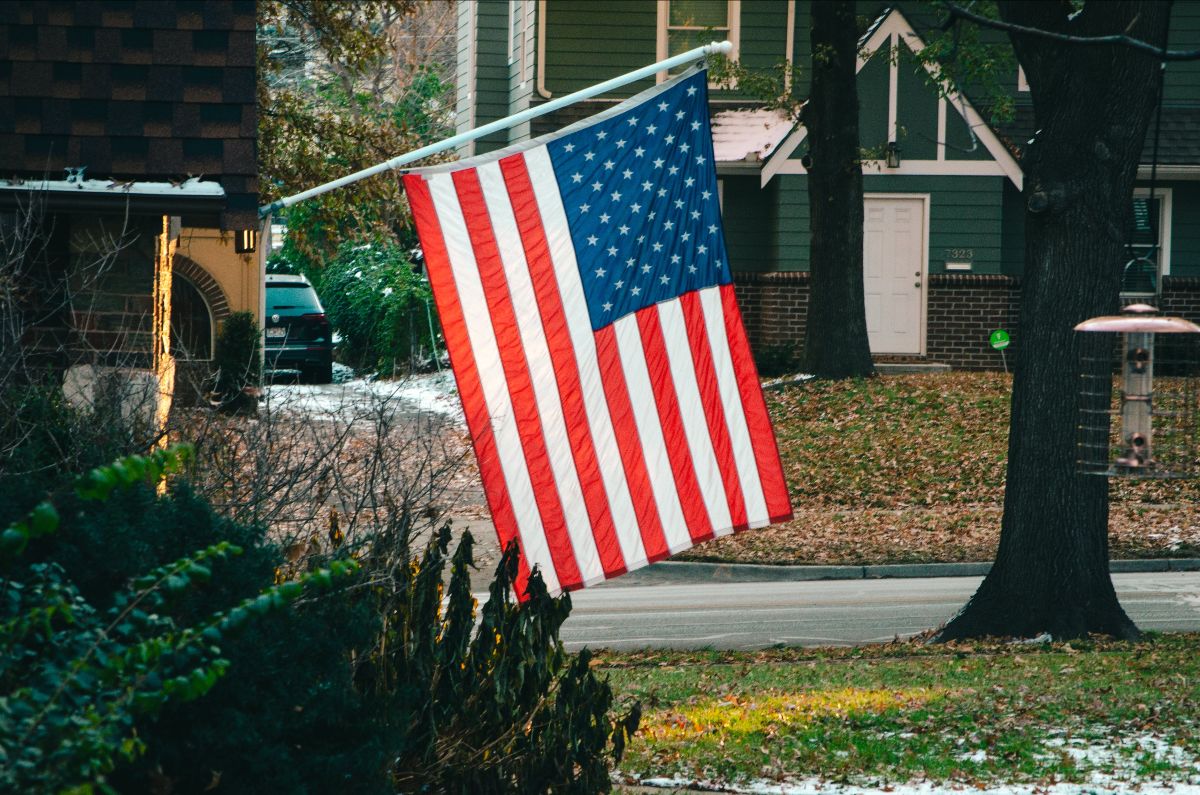
Lately I’ve been thinking about the way the new year raises questions of identity. January always seems to ask us to consider who we are, which is another way of asking: what is it we love?
In one sense, there’s a clear unity in the answer we give – and aspire to give – as Christians. We love God; we love our neighbor. We may not always live up to this love, but the root of it remains alive in our will, and we trust that the One who is Love, Himself, will bring it to fruition.
But like so much of the Christian life, this unity also embraces experiential variety and encourages us to ask again: what is it we love? Because arguably, the what, why, and how of this question forms the essential fabric of our lives, both individually and in community.
We love our families, our friends. We all understand this, even if the statements remain alive and experientially complex. But what does it mean to say that we love our country? The face of a person invites contemplation, but the face of a country exists at a more impersonal scale. “The United States of America” is something huge and abstract that includes – but isn’t reducible to – history, geography, culture, politics, economics, and so much more.
In his Four Loves, C.S. Lewis addresses related challenges when he suggests that unexamined or reductive forms of patriotism can slip into idolatry or farce – when we canonize, wholesale, a national past, for example, or make our love dependent on policies and practices we can support. Love isn’t blind, but neither is it conditional.
Ultimately, Lewis believes that the healthiest and most natural love of country springs from our local loves, as much (or more) from the familiar flavors of daily life as from the ideals and the symbols of our national identity. As with love in so many of its forms, the possibility of loving an entire population is essentially dependent – and only makes sense in light of – our love for the small and the particular, for our neighbor in the concrete immediacy of local place.
This is something the Benedictine tradition has long understood. With its emphasis on stewardship, community, and hospitality, the Benedictine Rule embraces the good of our brothers and sisters by inviting us to be present to them in this particular time and place. There’s a humble stability in welcoming those whom God brings into our lives and our neighborhoods. Even in teaching us that all men and women are our neighbors, Christ relates a parable about a specific Samaritan helping another man in his real and immediate need.
For those of us living in the U.S., 2024 is an election year, which promises not only a storm of competing rhetoric but also the opportunity to consider what our love of country is and means. The ballot box is an important part of responsible citizenship – and therefore of my active love of country – but I hope to remind myself throughout the year that patriotic love, too, is a rich and personal encounter, and that willing the good of my country begins with the reality of my home, my community, and my next door neighbor.
Wishing you all a fruitful January, wherever you call home!